
A SYNTHETIC JEWELRY RANGE
Three pieces. Explicit sellable units.
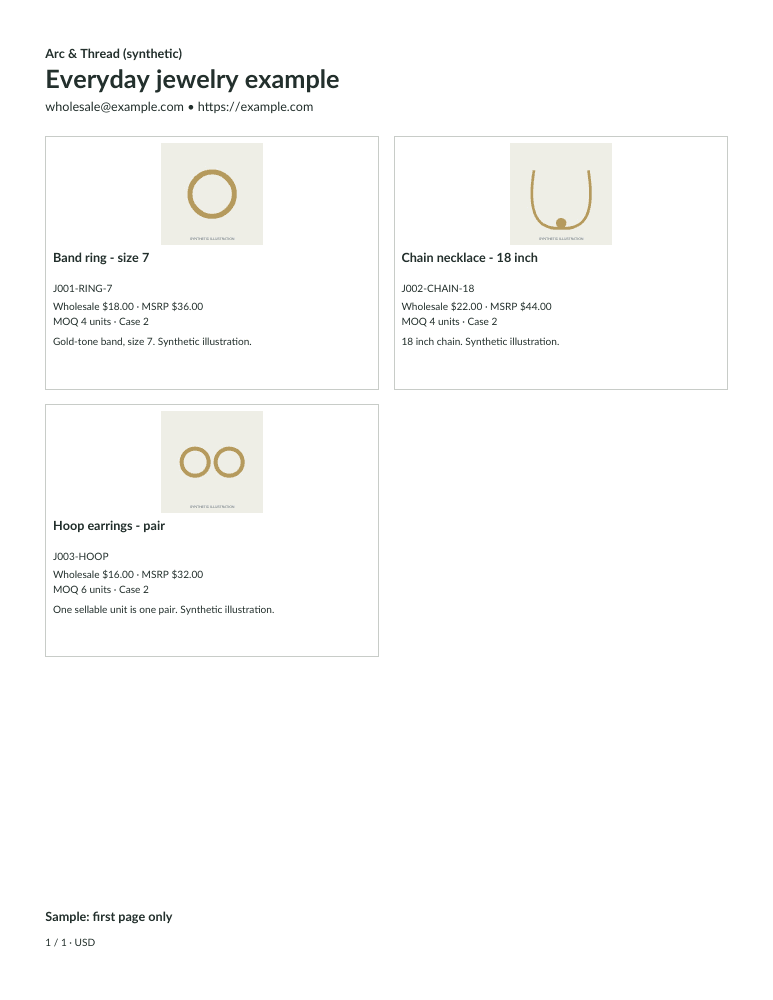
This worked jewelry example uses a band ring, an 18-inch chain and a pair of hoop earrings. Products, brands, prices and illustrations are synthetic. It demonstrates the existing flat-SKU workflow; the tool does not provide jewelry certification, material verification or automatic variant grouping.
Download a complete set of practice inputs
Unzip the input files. Import products.csv, confirm mappings and select the three products. In Photos, select the three JPEGs separately; their filenames match the CSV image_filename values. This ZIP contains ordinary input files, not an app assortment backup. You can also download just the CSV.
Describe variants without hiding the unit
| SKU / product | Wholesale / MSRP | MOQ / case |
|---|---|---|
| J001-RING-7 / size 7 ring | $18 / $36 | 4 / 2 |
| J002-CHAIN-18 / 18-inch chain | $22 / $44 | 4 / 2 |
| J003-HOOP / one pair | $16 / $32 | 6 / 2 |
One sellable hoop-earring unit is one pair in this fixture. MOQ 6 means six pairs, not six individual earrings. A different ring size needs a different SKU and row. The tool does not generate size variants from one parent product.
Keep materials, lengths and finishes concise enough for the actual measured card. Do not imply that synthetic descriptions certify a metal, gem or safety claim. Replace all fixture values with your own verified merchant information before commercial use.
Check whether the template fits your range
A fixed Letter layout supports up to six cards per line-sheet product page and up to 24 selected products in a pack. A small jewelry assortment with a single image and concise description per SKU fits this model; a large variation matrix, multiple detail photos or certificates require another workflow.
Your own marked first page is free without an account. Clean full PDFs are included with the paid active $9.99/month plan. The public fixture does not grant access to customer exports. Review photos and unit quantities before building your range.